Field Report · Operations
Sandbox VR vs Immersive Gamebox: An Operator's Field Teardown
Both rooms hold six players. How each one handles the seventh guest, the upgrade and the headset tells you how the business is built.

Sandbox VR and Immersive Gamebox both cap a room at six players. In October I took a group of seven to Sandbox VR in Houston. Three weeks later I took a group of six to Immersive Gamebox, also in Houston. I paid like any other customer at both, and both were a lot of fun.
I went as a customer and watched as an operator. I wanted to see the parts most reviews skip: the booking flow, the moment someone offers you an upgrade, how many staff it takes to run a room, and how your body feels 40 minutes in. Everything here is something any paying visitor could see, my own opinion, or something the companies have said in public. The staffing is what I saw on one visit to each, so read it that way.
Neither company is doing anything foolish. They made different bets, and the bets show up in small moments.
Two companies, one show
Sandbox VR is full-body virtual reality. You wear a headset, a haptic vest and trackers on your wrists and ankles, and two to six of you play a game that runs about 30 minutes. It was founded in 2016 and opened its first location in Hong Kong in 2017. The company says it did $75 million in sales in 2024, and in March 2026 it said it had passed $300 million in lifetime sales across more than 80 locations. It also says an average US location brings in $1.7 million a year.
Its backers include Andreessen Horowitz, the Alibaba Entrepreneurs Fund, Gobi Partners and Craft, and in January 2025 it said it had raised more than $60 million. It grows by franchising as well as running its own stores. The program started abroad in 2019, opened to US territories in April 2024, and the target is 200 locations by the end of 2027. The Houston location opened in January 2026 as the fifth in Texas. A franchise partner runs it, and tickets there run $55 to $65 a person. It has also been through a hard stretch. Its US arm filed for Chapter 11 in August 2020, after the pandemic closures, and came out of it that November.
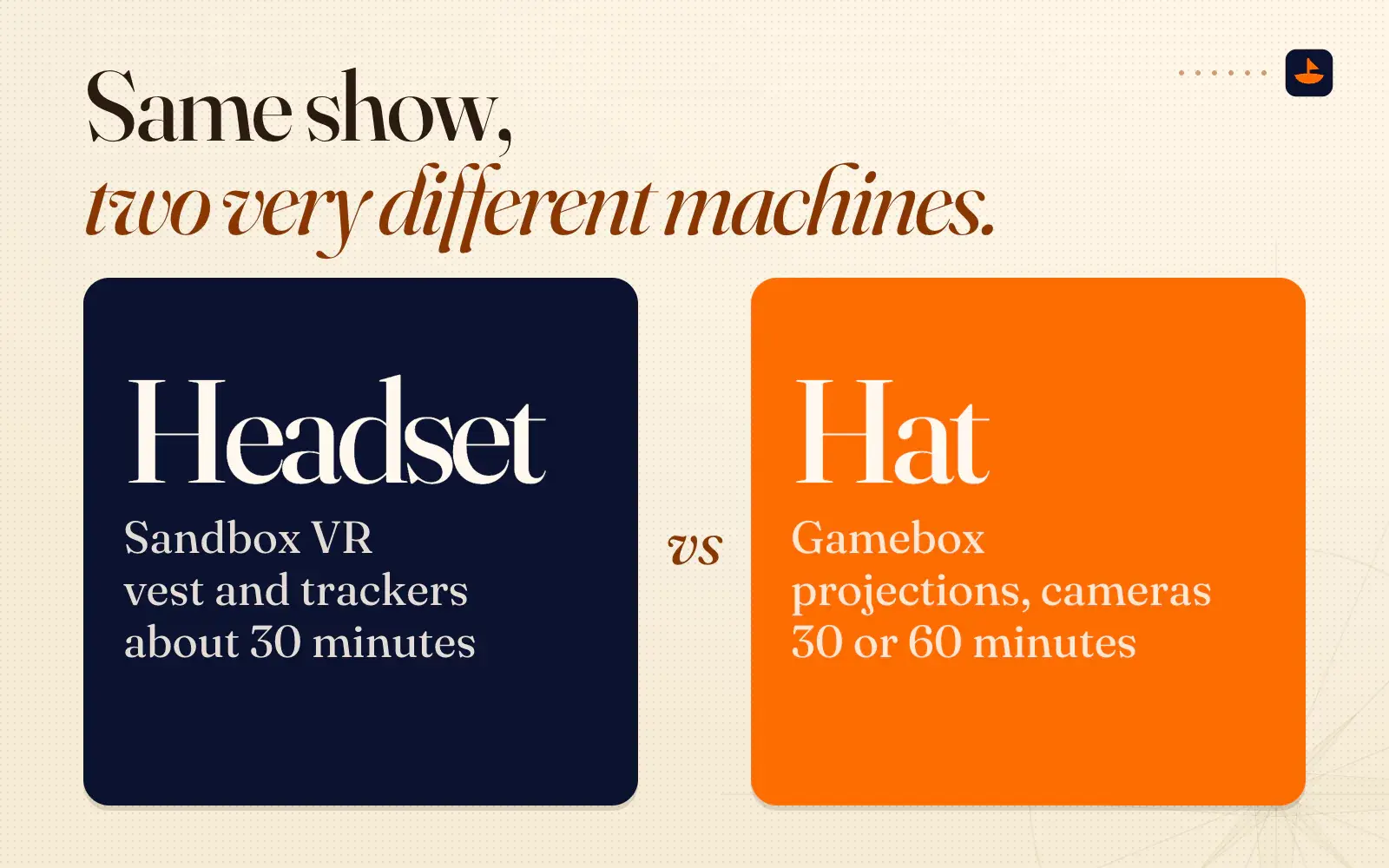
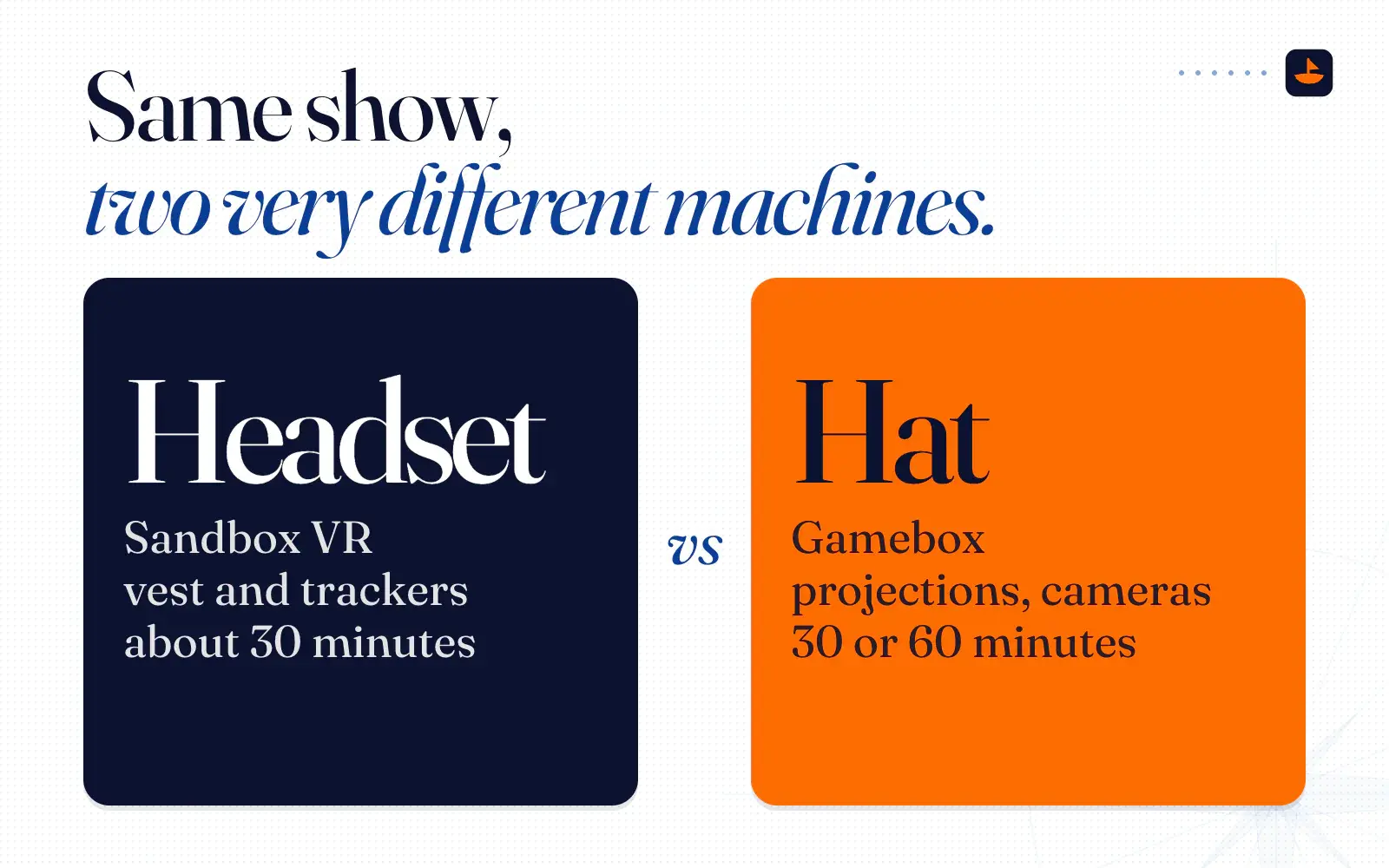
Immersive Gamebox has no headset. You wear a light visor that fits like a hat, three walls are projections you can touch, and cameras track where you stand. Up to six people play in each box, and games run 30 or 60 minutes. It was co-founded by Will Dean, who founded Tough Mudder, and it opened in London in 2019 as Electric Gamebox. It raised an $11 million Series A2 in 2021, then $20 million in debt from Harlan Capital in 2022. The UK company went into administration in December 2024, and in February 2025 the private equity firm Harlan Capital Partners bought the business, which had 32 locations at the time. It runs its own venues and has opened franchises in France and Canada. It doesn't publish revenue.
Both companies license the same hit. Sandbox VR says its Squid Game Virtuals has passed $50 million in lifetime sales since 2023, and Squid Game was the game we played at Gamebox. Same show, two very different machines.
The booking funnel: what happens to the seventh guest
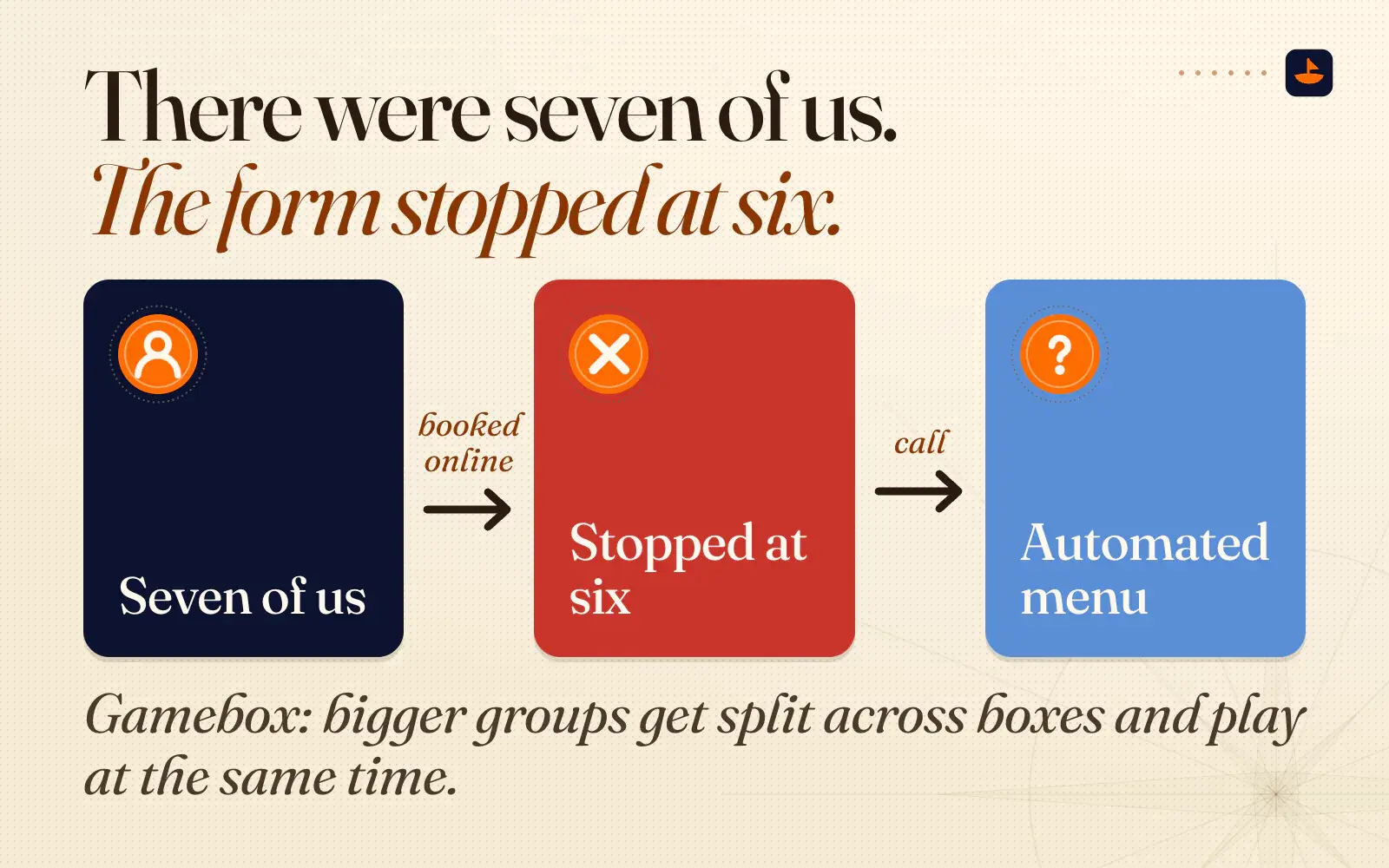
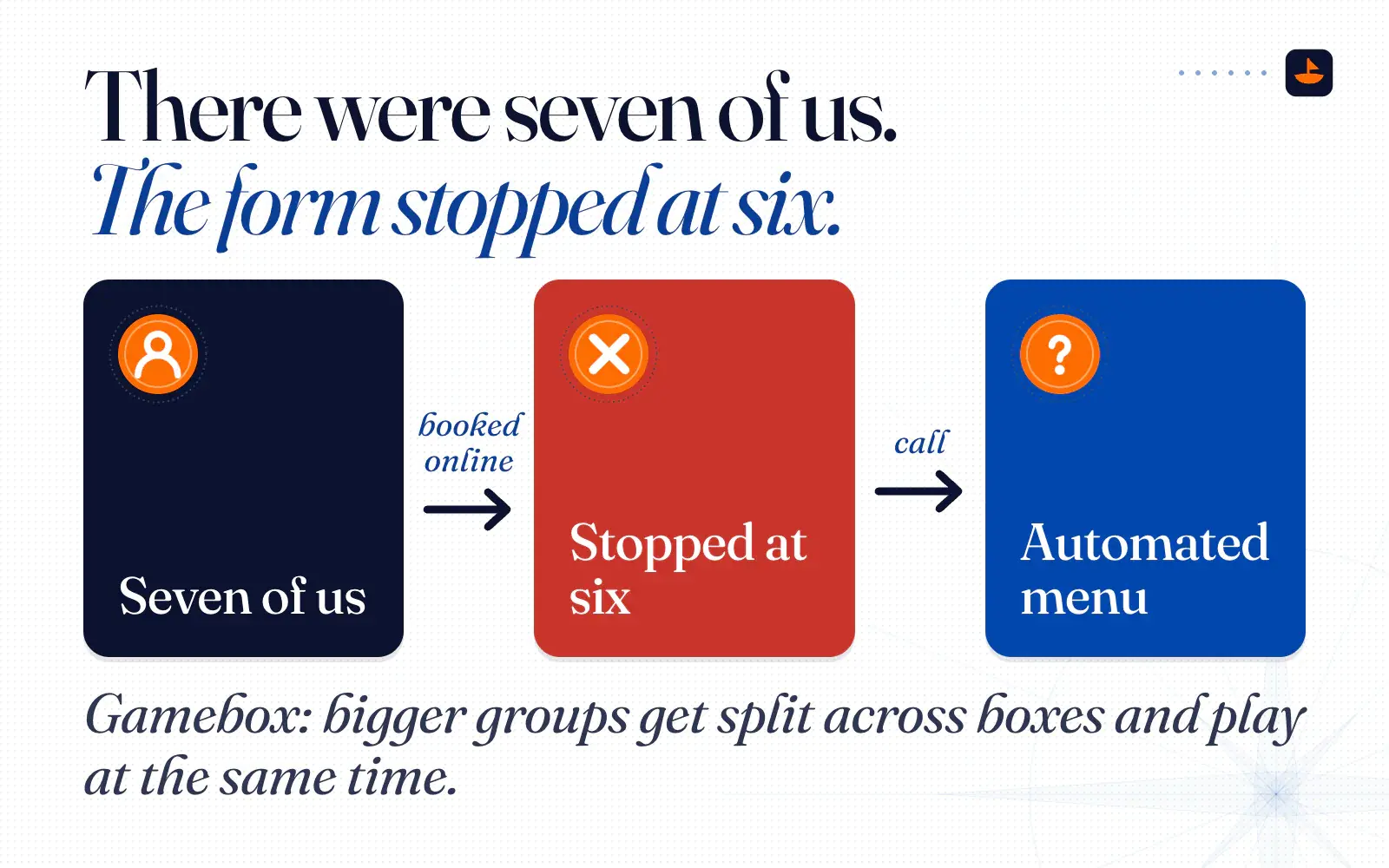
When I booked Sandbox VR online, the form stopped at six. There were seven of us. I tried to call and sort out one more person, and I got an automated menu, press one, press two, and nobody picked up. In my notes that night I put it bluntly: "Money lost right there by chopping off at six."
To be fair, Sandbox VR has an answer for this. Its FAQ sends groups larger than six to a Parties and Events page, and it lists a guest services line with set hours. But the flow I was in ended at six, and the next step was another page or a phone call.
Gamebox had the same cap and a different answer. The manager had us down for seven and had already put us in two boxes. His plan was three and four, because six and one makes no sense. Only six of us came, so we played together in one box. Gamebox's own site says bigger groups get split across boxes and play at the same time. Its booking system reserves the extra boxes automatically.
Neither venue answered a phone for me, by the way. When I called Gamebox, a recording asked me to text instead, and the texting turned out to be a chatbot.
Here's the capacity math. One Sandbox VR employee told us a busy Saturday can run to around 56 bookings, mostly groups of four to six, and that a walk-in group of four often can't get a slot during the day. Fridays are hit or miss, the same employee said, and we went on a Friday. On a sold-out Saturday, splitting seven into four and three would use two rooms to sell seven tickets, where two full groups would pay for twelve. The cap is right for that day. On a slow Friday, the second room was going to sit empty anyway, so splitting seven sells seven tickets instead of six. That's a ticket the form couldn't sell.
Setup and staffing
At Sandbox VR, one host took our group from gear-up to goodbye, with a second person at the front desk. He gave each of us a color and fitted our trackers, letter side up on the ankle, or your foot shows up upside down in the game. He checked every vest, played us a trailer and walked us through the robots we could pick. He also ran the upgrade sale.
His safety talk covered three rules: stay inside the red rectangle on the floor, yell "Assistant" instead of "help" because people yell "help" in the game all the time, and never take your own headset off. Then he put the headsets on us, watched the game from an iPad, and handed out our highlight videos with a QR code at the end. He was good at all of it. By the timestamps on my voice notes, it was about 20 minutes from the first tracker to the first shot, seven of them spent on the upgrade, and about an hour from check-in to goodbye for 30 minutes of play.
At Gamebox, the general manager ran the whole place by himself. He told us there are six boxes and that they're copies of each other, so when something goes wrong he's troubleshooting one design six times over. He briefed us once from the doorway so he wouldn't have to go into each box, and then the room took over. A short video on the wall taught us the controls: step forward and your dot moves up the wall, touch the wall with your whole hand, and please don't slap or kick it. We were playing within about ten minutes of his briefing, and the only gear was a hat.
Standing in the box, I said it out loud: "This is so much less friction than the VR stuff." A few minutes later I added, "One person can manage six rooms."
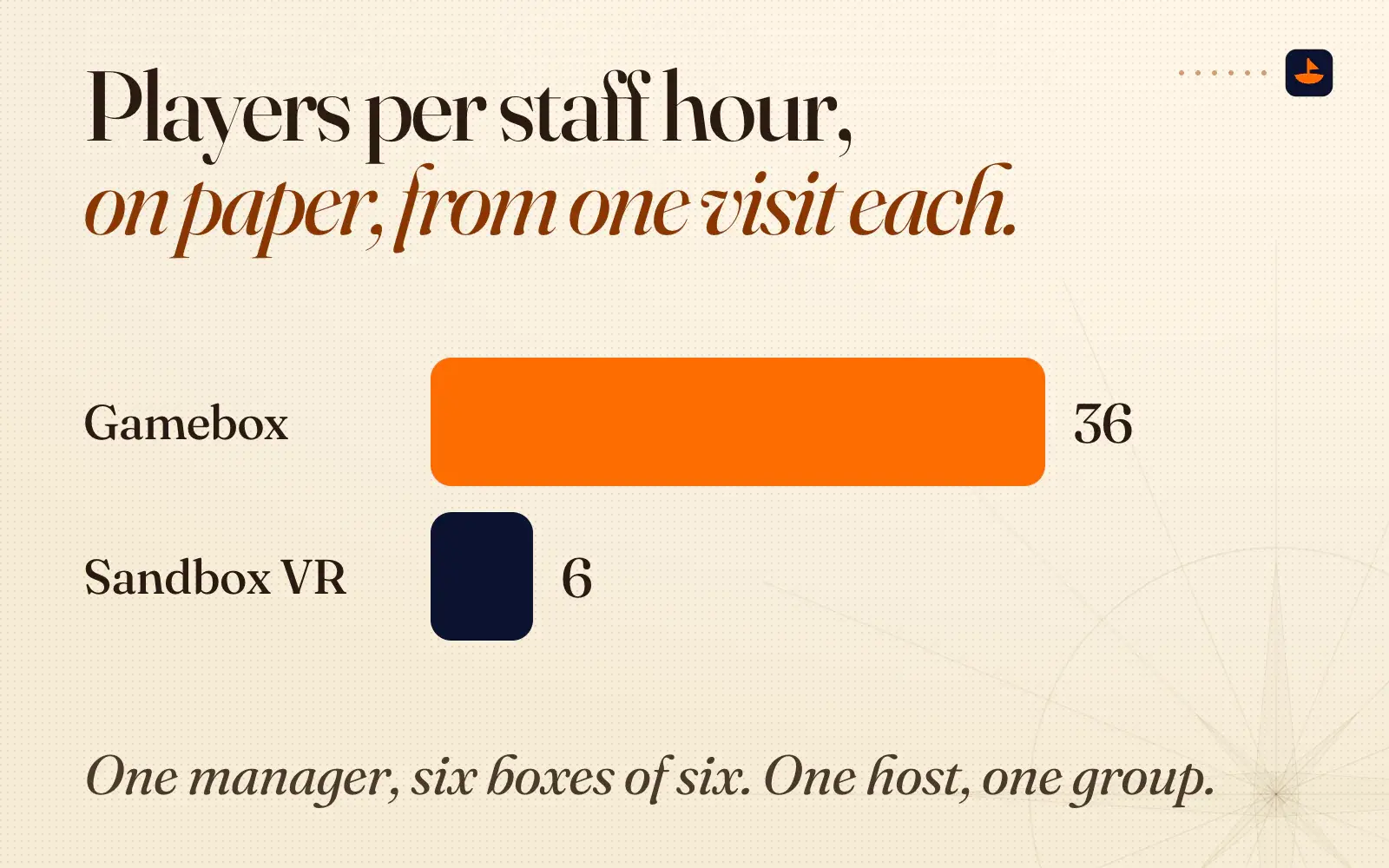
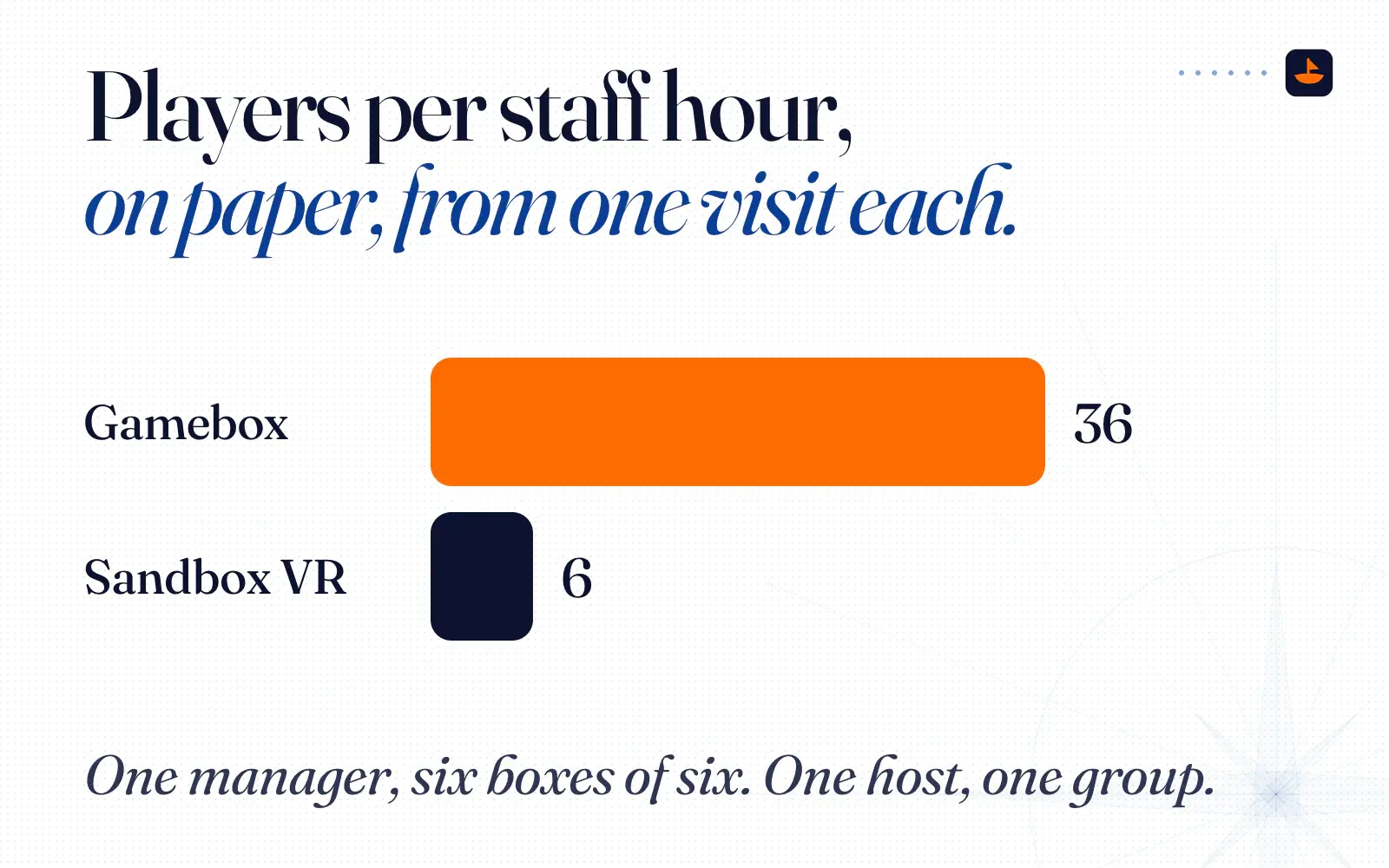
Here's the staffing math on paper, from one visit each. Gamebox's ceiling is six boxes of six players for an hour with one manager, which is 36 players per staff hour. The Sandbox VR host I saw ran one group of up to six for about an hour, which is six players per staff hour. That's a ceiling, not a measurement. A Sandbox VR host may overlap groups on a busy night, and I saw Gamebox on a quiet weekday. The shape still holds. Sandbox VR puts a person in the loop for the whole hour, and Gamebox puts the instructions in the room.
The upgrade moment
At Sandbox VR the upsell came in the briefing room, right after the trailer. Our host offered an upgrade called the Exterminator for $6.99 a person. He was honest about it. He said the game is fun without it, and that he doesn't make any money if you buy it. I told him they'd be smart to give staff a cut, something like 25 percent, and he agreed he'd push a little harder if they did. Two of us said yes.
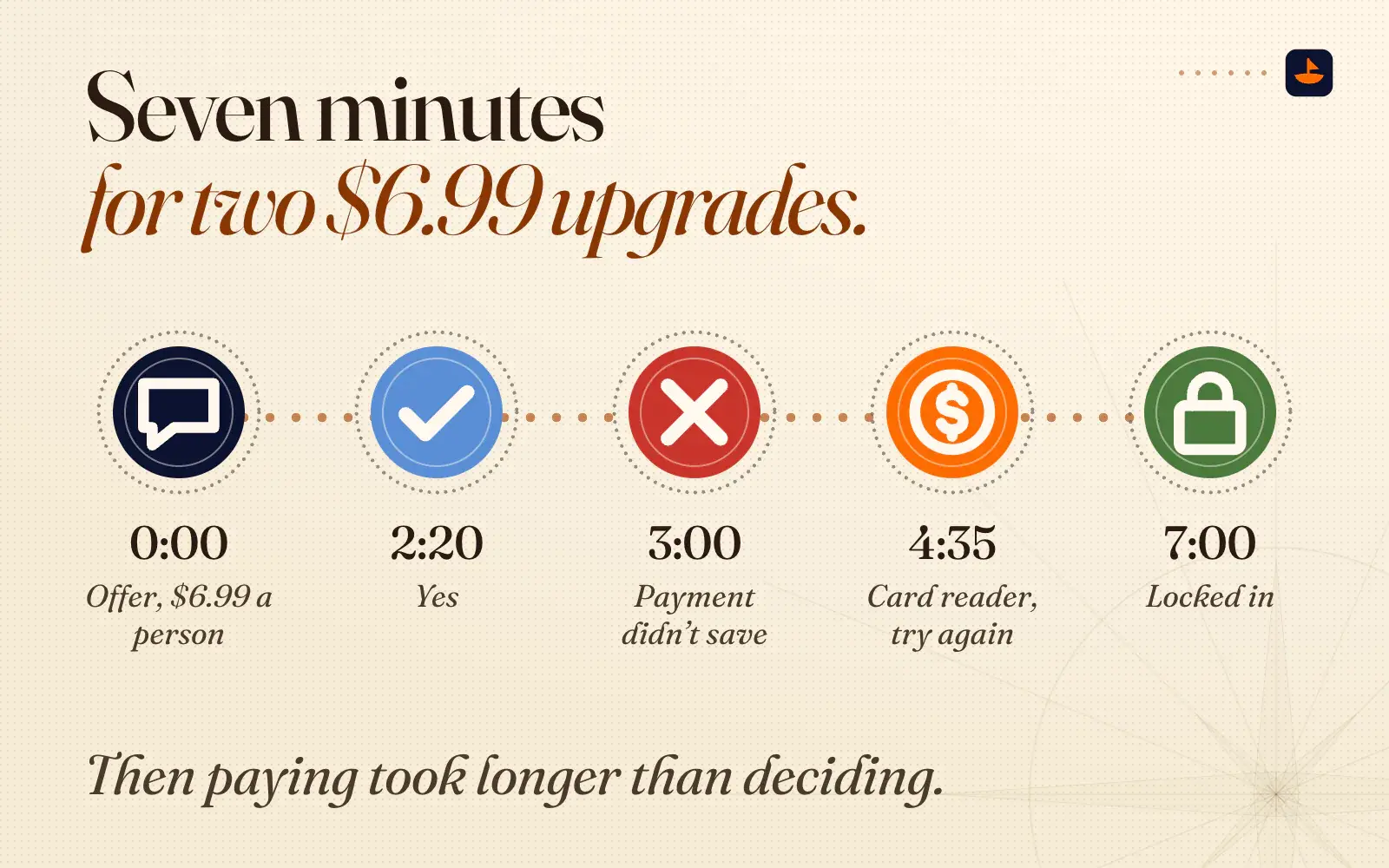
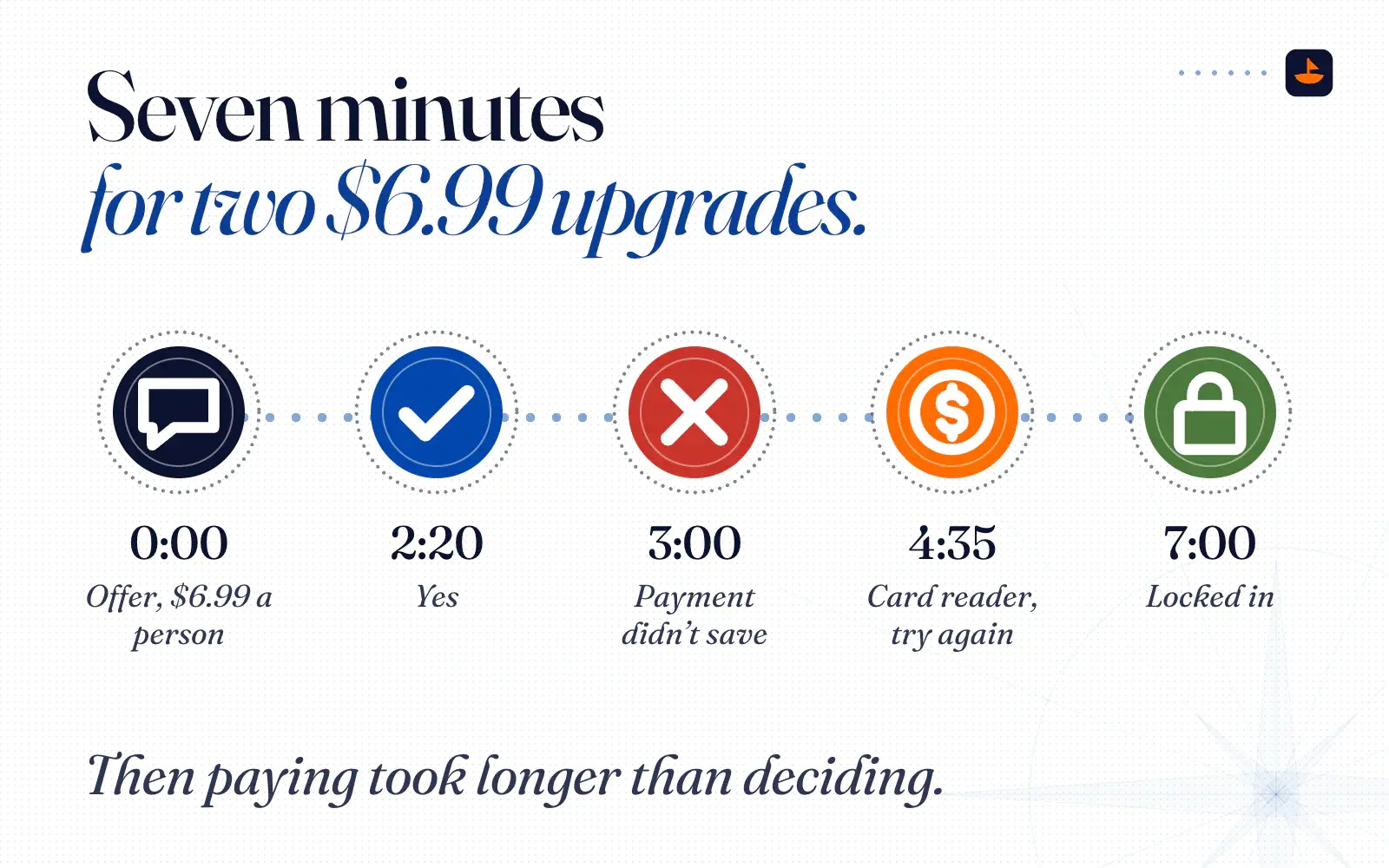
Then paying took longer than deciding. By the timestamps on my voice notes, the offer came at 0:00 and we said yes at about 2:20. The first payment didn't save at about 3:00. Our host had to fetch a card reader and try again at about 4:35, then we sorted out how many of us were buying, and the loadout was locked in at about 7:00. In the room I said, "They gotta make that more frictionless." That's seven minutes of a host's time and a group's patience for two $6.99 upgrades.
There's a second cost to hardware upgrades. On an earlier Sandbox VR visit, a friend paid for an upgraded gun and it glitched. Staff swapped it, the replacement did the same thing, and after fighting it for most of the game he gave up on it. An add-on you sell has to work every time.
Gamebox put its upsell in the booking flow instead. When I booked, I picked a three-month Game Pass, which the site sells as "Play unlimited. Any day. Any group." There was no card reader moment at the venue. At the end, the manager sent me a link to book the next visit free under the pass. He also threw in a bonus game called Box Party at no extra cost, and he said he'd ask about drinks at the start and again halfway through. When he offered that bonus game, my read was that another round in a Gamebox costs him little more than electricity.
Both venues work the exit. Sandbox VR offers 20 percent off if you book your next visit before you leave, good for six months. Gamebox hands you a card for 50 percent off a different game. Over dinner after Sandbox VR, we kept piling on upsell ideas until someone asked at what point it costs you integrity. I agreed with the question, and my answer was that "it needs to be tasteful and graceful."
The headset and the hour
Sandbox VR's game runs about 30 minutes. Mid-game I said, "If I was in this for more than an hour, I'd have a crazy headache." Afterward my eyes hurt, a few of us were dizzy, and a couple of us said our eyes were sweating inside the headset. Some of us lost comms during the game, and one mic was loose.
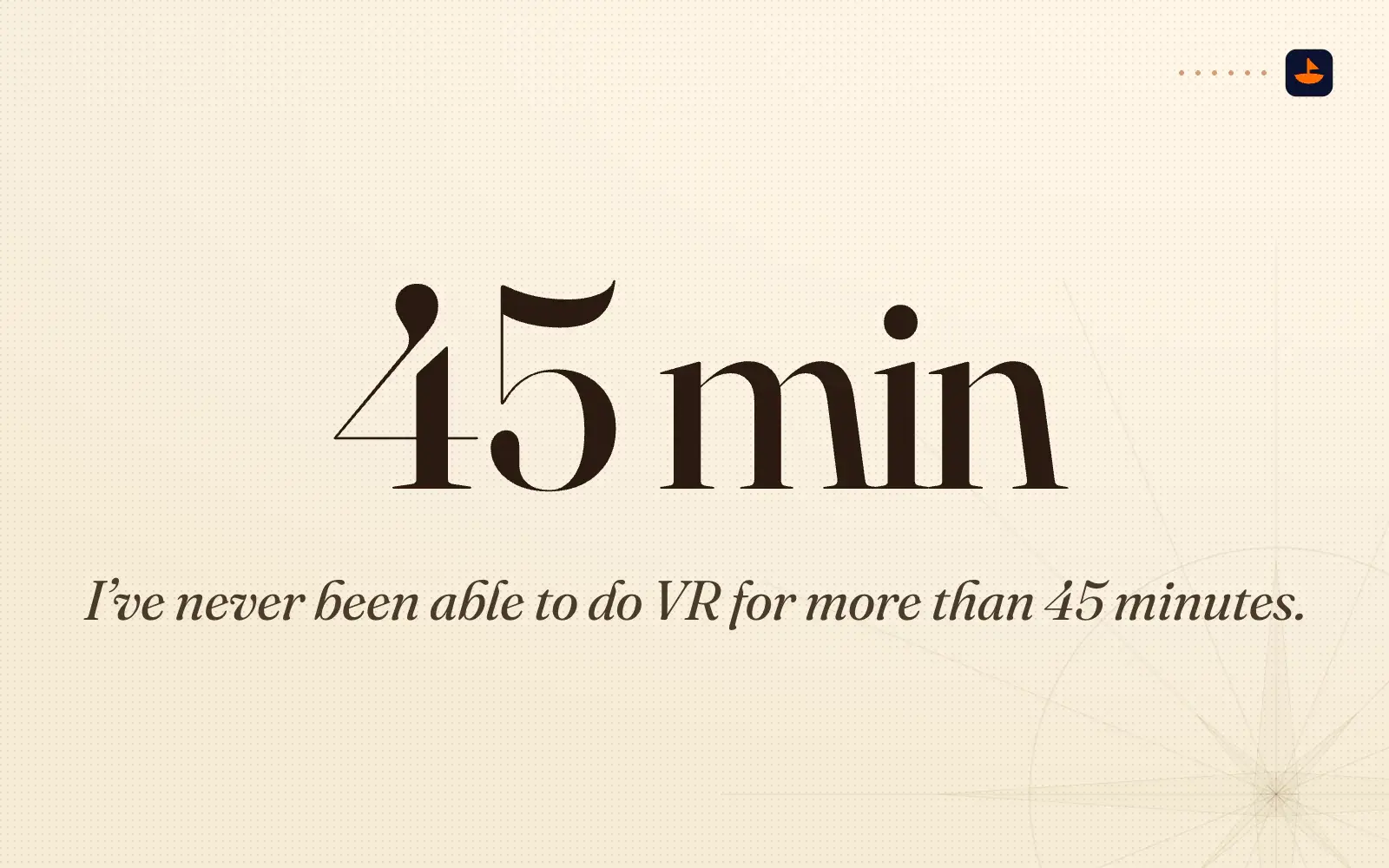
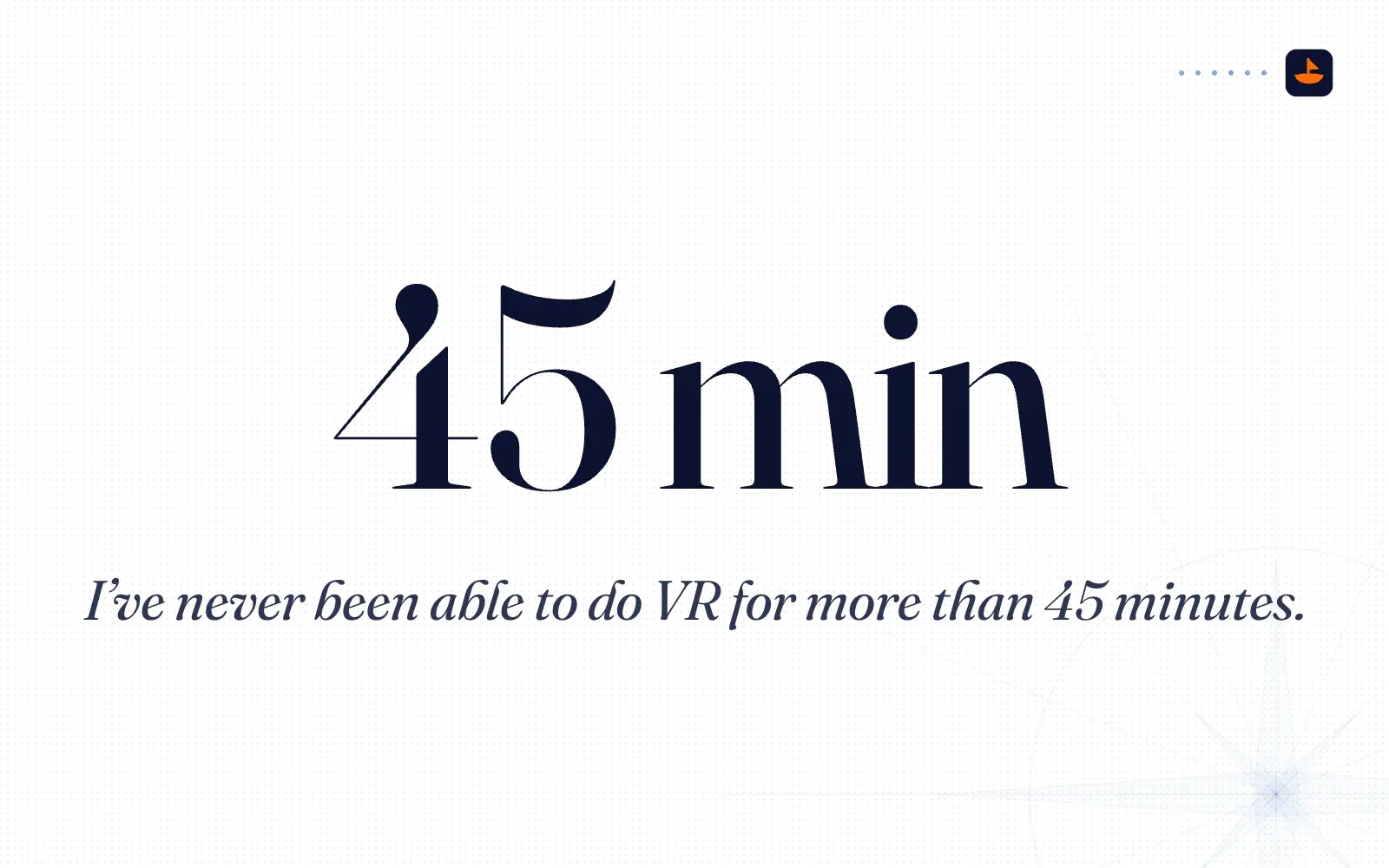
Three weeks later, standing in a Gamebox, I put my limit into words. "I've never been able to do VR for more than 45 minutes," I said. Sandbox VR's 30 minutes sits inside that limit. In the Gamebox my eyes were fine, because I was looking at a projection screen.
Gamebox has the opposite trade-off. Our Squid Game ran an hour, and you have the box for the whole hour. Many of the rounds go one or two players at a time, so some of that hour is standing and watching, and there's nowhere to sit in the box. I agreed out loud that there should be couches. I also missed the way bowling and Topgolf let you rotate. "What I like about bowling and Topgolf is you can rotate," I said. "You can go to the bathroom, you eat. You don't have to play."
The avatars were the other gap for me. Each of us got a preset character in our color. "I don't have any attachments to these digital characters," I said mid-game, and at dinner it was the first thing I brought up: "Something I wish that we had differently was attachment to our avatars." I wished I had my own avatar that carried over every time I went.
What each one does better
Sandbox VR wins on immersion. Standing in a Gamebox three weeks later, I said it plainly: "The VR immersed us the best." Part of it is the prop in your hands. "What I liked about the VR was that you had to hold something," I said, "but I don't always want to do that. I'd like there to be the option." Sandbox VR also keeps the game at about 30 minutes, includes the highlight videos for free, and our host sold the upgrade honestly.
Gamebox wins on friction and staffing. It runs on a hat instead of a headset, a briefing from the doorway, a room that teaches itself, and six identical boxes under one manager. It sold me its upgrade when I booked, so nobody went looking for a card reader, and the manager had a plan for a group of seven. My eyes were fine for the full hour.
What each could borrow. Sandbox VR could make paying for the upgrade instant, or offer it when you book, the way Gamebox sold me its pass. It could give the seventh guest a path inside the same form. It could also sell the raw game footage on top of the free edited videos. The edited clips are good, but there's no way to buy the raw files, and as I said that night, if a group walks out without paying for the raw video, you can just delete the footage. Gamebox could add somewhere to sit, a way to step in and out of a game, and characters you care about.
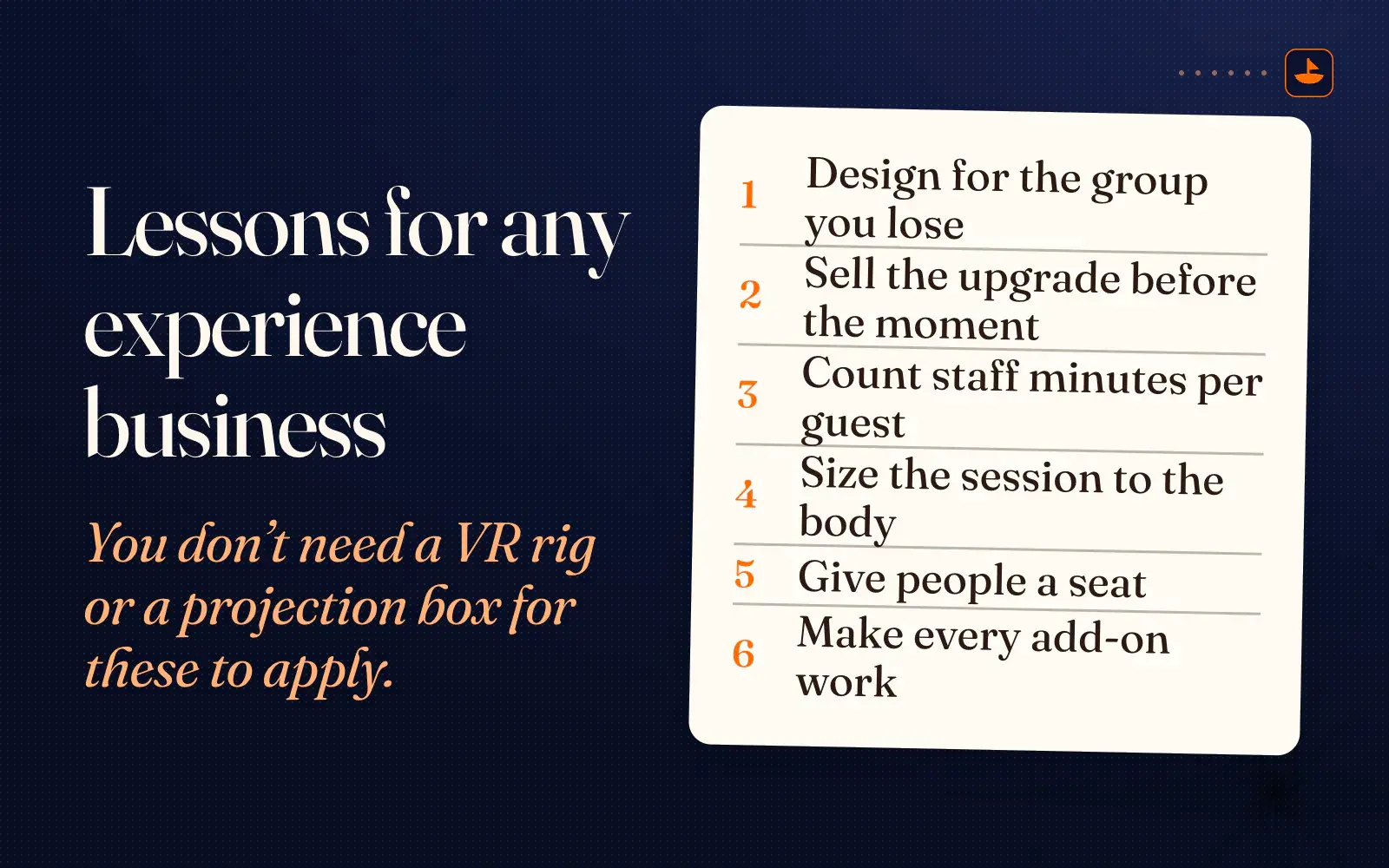
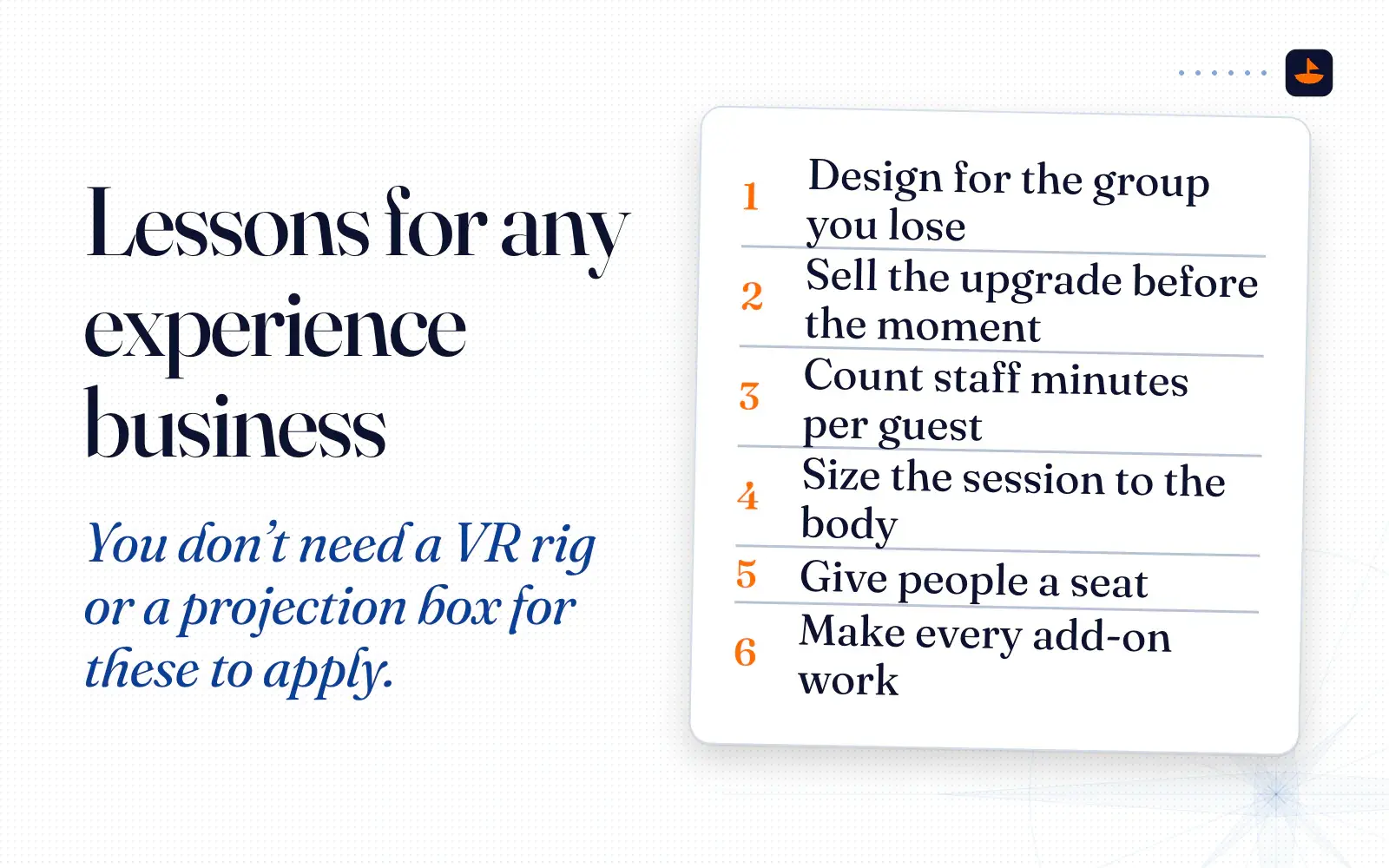
Lessons for any experience business
You don't need a VR rig or a projection box for these to apply. They work for an escape room, a climbing gym, a cooking class or a golf simulator.
- Design the booking flow for the group you lose. A cap is fine, but a dead end costs you. Give the seventh guest a path inside the same flow, like a split across two rooms or a callback, and open it up on slow nights.
- Sell the upgrade before the moment, or make paying instant at the moment. Seven minutes for two $6.99 upgrades is the cost of selling at the wrong time with the wrong tool.
- Count staff minutes per guest. Decide where a person makes the experience, like a great host, and where software can do the job, like a rules video on the wall.
- Size the session to the body. A headset, a hot room or a hard workout each set a ceiling. Find yours and sell under it.
- Give people a seat and a reason to come back as themselves. That means somewhere to rest between turns, and an identity that carries from one visit to the next.
- Every add-on has to work every time. Keep upsells tasteful and graceful.
The short version
Both rooms hold six. Sandbox VR spends people and hardware to make the more immersive 30 minutes, and Gamebox spends software so one manager can run six rooms. Sandbox VR loses time and tickets at the edges: the seventh guest, the phone and the card reader. Gamebox loses comfort and attachment in the middle: no seat, a locked hour and avatars we didn't care about.
If you run any experience business, walk your own funnel as a customer this month. Book for one more person than your cap, call your own phone, buy your own upgrade, and stand in your own room for the full session. I post what I'm testing and building on X @PalafoxPalmer.
Sources
- Frequently Asked Questions,
- Sandbox VR Continues to Expand Across Texas with a New Houston Venue,
- Sandbox VR Houston
- Sandbox VR is opening its first Houston location,
- New Funding to Accelerate Sandbox VR's Global Franchise Program,
- Sandbox VR surpasses $200M in lifetime sales,
- Sandbox VR hits $300M in lifetime sales and grows to 80 locations,
- Sandbox VR US subsidiary files for bankruptcy,